Wish you knew which condo amenities actually boost resale in West New York and which just bump up HOA fees? You are not alone. Between commuter needs, waterfront living, and a mix of newer and older buildings, it can be hard to separate nice-to-have from must-have.
In this guide, you will learn which features tend to hold value along Boulevard East and the Port Imperial waterfront, how building finances affect long-term value, and a simple checklist to compare buildings with confidence. Let’s dive in.
What matters most in West New York
If you plan to live or invest in West New York, two realities shape amenity value. First, this is a commuter market. Proximity to bus lines, light rail, and ferry service at Port Imperial influences daily life and the buyer pool. Second, waterfront living is a draw. Hudson River and Manhattan skyline views often carry a premium, sometimes more than a long list of indoor amenities.
Flood exposure also plays a role near the waterfront. Some parcels lie in FEMA-designated zones, which can affect insurance costs and lender underwriting. Before you make an offer, review the FEMA Flood Map Service Center and ask each building about elevation and mitigation work.
Parking that pays off
Deeded or guaranteed garage parking has high resale impact in a commuter-heavy area with limited street parking. You can expect broader demand when parking is included or available on-site.
- What to look for: Deeded spaces, good lighting and ventilation, clear rules, and EV-ready infrastructure.
- Costs to weigh: Parking structures require ongoing maintenance. Fees can be separate or baked into HOA dues.
- Red flags: Remote or shared parking, high monthly parking fees, long waitlists, or no plan for EV chargers.
Doorman and concierge
A staffed entry provides security, package handling, and a sense of service. It often appeals to safety-minded buyers, downsizers, and those who travel.
- Value upside: Recognizable prestige and convenience. Helpful for frequent deliveries.
- Costs to weigh: 24-hour staffing is labor intensive and can raise HOA dues.
- Red flags: High fees without visible service quality or limited hours that do not match expectations.
Fitness centers and pools
A well-maintained gym usually helps demand, especially for younger professionals and families. Pools are eye-catching, but their value depends on how you will use them and the HOA cost.
- Gym value: Moderate impact if equipment is current and the space is clean and open consistently.
- Pool value: Mixed. Attractive for resort-style living, but often a driver of higher dues.
- Red flags: Outdated or closed facilities, recurring mechanical issues, and poor cleanliness.
Package rooms and secure lockers
With so many commuters and remote workers, reliable package handling is a practical amenity that reduces theft risk and daily hassle.
- Value upside: Rising importance due to e-commerce.
- Costs to weigh: Software and locker systems are moderate compared to staffing-heavy amenities.
- Red flags: Overflowing lobbies, informal shelves, or overwhelmed front desks.
Storage that solves space
Extra storage and bike rooms make a real difference in condo living where every square foot counts.
- Value upside: Moderate to high. Especially helpful for downsizers and long-term owners.
- Red flags: Damp or unsafe storage areas, long waitlists, or unclear allocation.
Outdoor spaces and iconic views
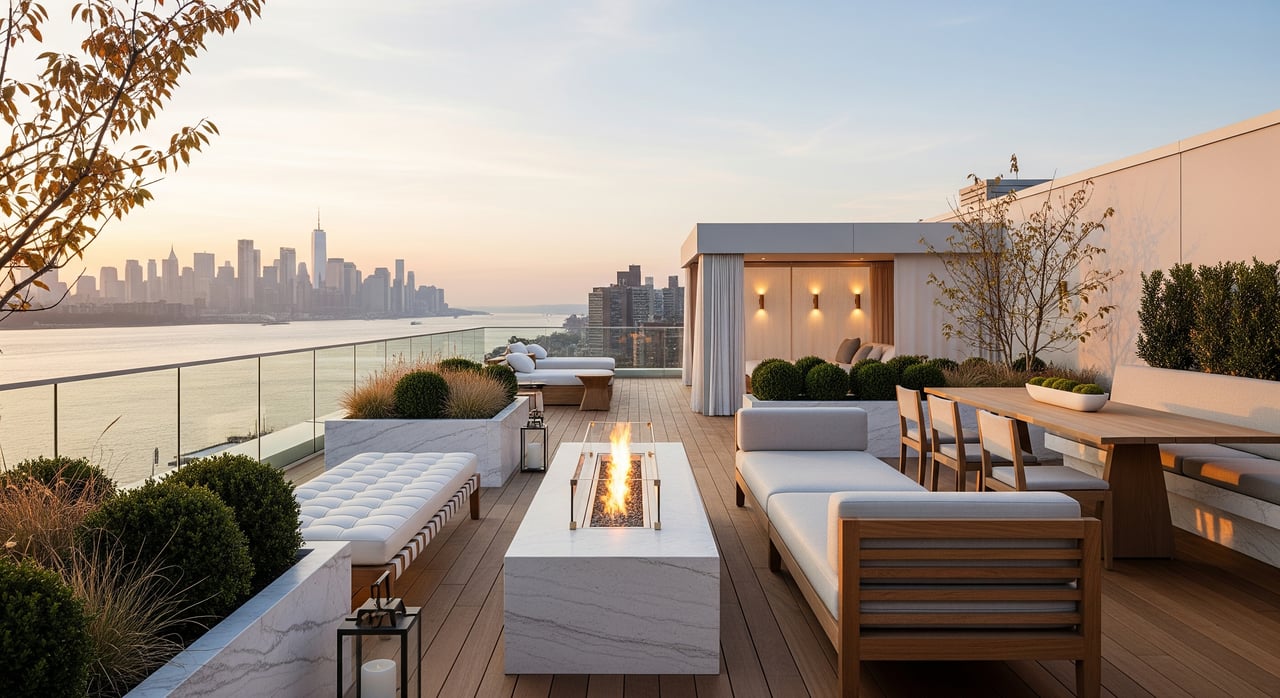
Common roof decks, landscaped courtyards, and private terraces are among the most coveted amenities near the Hudson. Along Boulevard East and Port Imperial, outdoor space paired with skyline views tends to hold value over time.
- Value upside: High. Usable outdoor areas can substitute for a yard.
- Costs to weigh: Ongoing maintenance and weatherproofing on the waterfront.
- Red flags: Poor upkeep, limited hours, or rules that restrict typical uses.
Balconies and view orientation
Even a small private balcony can be a difference-maker. Water and skyline exposures often command a premium at resale.
- Value upside: Very high across buyer segments.
- Costs to weigh: Balcony and façade maintenance is critical near the water.
- Red flags: Recurring balcony repairs or structural issues that lead to assessments.
In-unit must-haves
Practical, everyday features tend to outperform flashier shared amenities when it is time to sell.
- High-impact upgrades: In-unit washer/dryer, modern kitchens and baths, and efficient, individually controlled HVAC.
- Costs to weigh: Upfront renovation costs but minimal HOA impact.
- Red flags: Building restrictions on in-unit work or inadequate ventilation for laundry.
Pet-friendly features
Pet-friendly policies and on-site dog areas can widen your buyer pool.
- Value upside: Moderate, given the number of pet owners in urban condos.
- Red flags: Restrictive pet rules on size or breed that limit future resale.
EV charging readiness
EV charging is moving from nice-to-have to expected. Even a plan to add chargers can signal future readiness.
- Value upside: Growing, especially for owners who plan to stay longer term.
- Costs to weigh: Electrical capacity upgrades and charger installation.
- Red flags: No EV plan or unrealistic timelines for adding capacity.
The money behind amenities: HOA health
Amenities only hold value if a building’s finances are strong. Review the operating budget, reserve fund, and maintenance history for a complete picture.
- HOA dues: Compare fees across similar buildings and note what they include. Staffing-heavy amenities, pools, and garages can raise dues.
- Reserve strength: A well-funded reserve and a history of planned capital projects reduce the risk of surprise assessments.
- Deferred maintenance: Waterfront buildings face faster exterior wear. Neglected amenities quickly become liabilities.
For a primer on condo governance and consumer resources, see the New Jersey Department of Community Affairs guidance for community associations.
Flood risk and resilience
If you are comparing waterfront towers, ask pointed questions about flood zone status, mitigation, and insurance.
- Check maps: Use the FEMA Flood Map Service Center to see flood zones and elevation.
- Insurance: Buildings in flood zones can face higher premiums and coverage limits. Ask what the HOA policy covers and what owners must carry individually.
- Amenity placement: Ground-level gyms, garages, and mechanical rooms can be vulnerable during storm events. Ask about past incidents and improvements.
Commuting convenience still matters
A building’s transit access can be just as valuable as its amenities. Many buyers prioritize door-to-door time to Manhattan.
- Ferries: The NY Waterway Port Imperial terminal offers frequent service.
- Buses and light rail: Review routes and schedules through NJ Transit and plan your typical commute window.
How to compare buildings: a quick checklist
Use these questions during tours and due diligence to see beyond the brochure.
- Financials and reserves
- Request the current HOA budget, last 3 years of financials, and the reserve study.
- Ask about recent or planned special assessments and major capital projects.
- Confirm what dues include. For example, heating, hot water, internet, trash, snow removal.
- Amenity operations and rules
- Who operates amenities and how long are vendor contracts?
- What are posted hours and reservation systems for the gym, pool, or roof deck?
- What are guest policies, rental rules, and any rental caps?
- Maintenance history
- Review maintenance logs for pools, HVAC, elevators, and garage waterproofing.
- Ask about façade or structural repairs and timelines.
- Parking and EVs
- Is parking deeded or assigned? Included or extra? Any waitlist?
- Are EV charging ports available or planned, and how will costs be allocated?
- Packages and security
- Is there a dedicated package room or locker system? How are deliveries handled after hours?
- What security measures are in place, such as cameras and controlled access?
- Flooding and insurance
- Is the building in a flood zone? What mitigation steps are in place?
- What insurance does the HOA carry and what must owners carry individually?
- Amenity demand and access
- How busy are the gym and shared spaces? Any waitlists for storage or bike rooms?
- Are amenities shared with other buildings or exclusive to residents?
- In-unit flexibility
- Are in-unit washers and dryers allowed? What is the renovation approval process?
Smart tradeoffs for long-term value
- Prioritize practical, everyday benefits. Deeded parking, secure package handling, and easy transit access often deliver the most consistent resale lift.
- Give extra weight to private outdoor space and views. Balconies and skyline exposures tend to hold value along Boulevard East and Port Imperial.
- Balance luxury with cost. Pools and full-time staffing add prestige but can push dues higher. Make sure you will use them.
- Think ahead. EV charging, resilient building systems, and strong reserve funding are the kind of future-proofing that today’s buyers notice.
When you are ready to compare specific buildings, a local advocate can help you read between the lines of HOA documents, budgets, and rules. If you want a clear, side-by-side view of your options, reach out to Sonia Dasilva for tailored guidance and a calm, step-by-step process.
FAQs
Which West New York condo amenities add the most resale value?
- Private balconies with skyline views, deeded garage parking, in-unit laundry, well-run package rooms, and usable outdoor common spaces typically show the strongest, most consistent demand.
How do HOA fees affect the value of amenities in high-rises?
- Buyers often discount flashy amenities if HOA dues are high relative to comparable buildings, so strong reserves and efficient operations are key to preserving value.
What should I ask about flood risk near Port Imperial?
- Ask if the property is in a FEMA flood zone, what mitigation is in place, where mechanicals and amenities are located, and how flood insurance costs affect the HOA budget.
Is a doorman worth the higher dues for resale?
- A staffed lobby can broaden your buyer pool, but weigh the service quality against the added monthly cost and your actual usage.
Does an on-site gym matter if there are nearby fitness options?
- A clean, well-equipped gym still helps daily convenience and demand, but poor maintenance or frequent closures can erase that benefit.