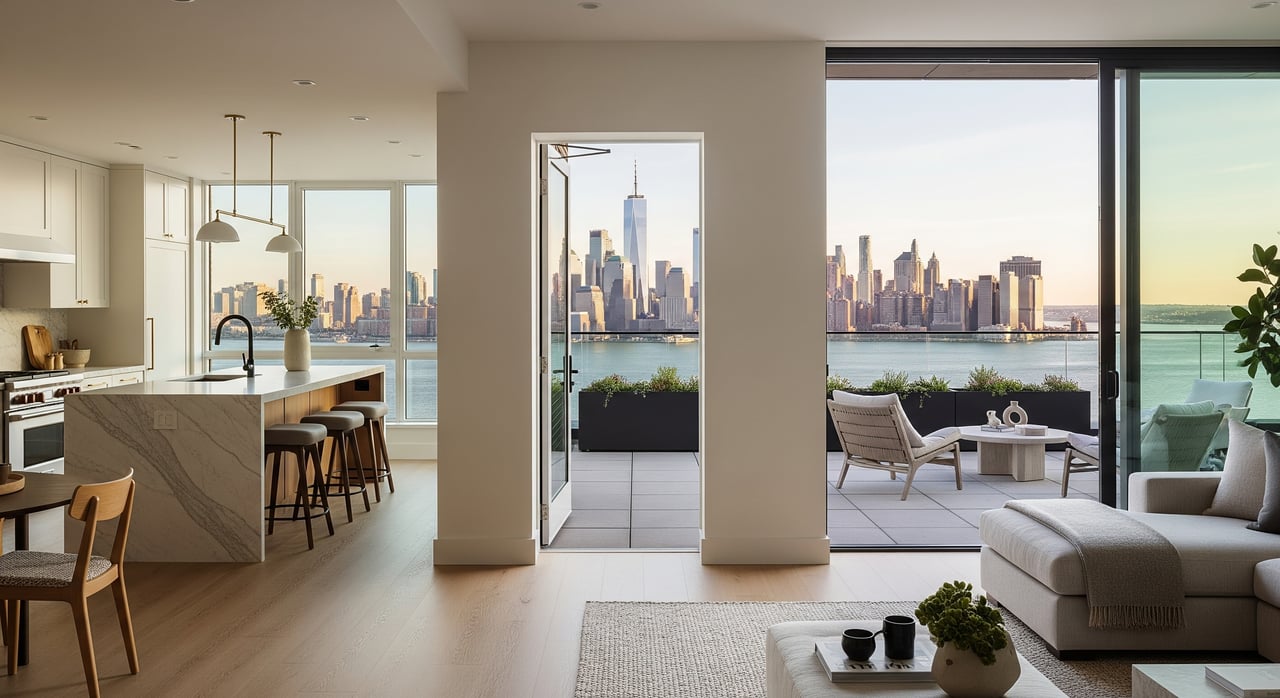
Think buying a Union City condo is out of reach? Many first-time buyers in Hudson County use proven programs that reduce upfront cash, lower early payments, and even offer tax credits. You want a place that fits your life and your budget, without surprises. This guide breaks down the options you can pair to get there, how they work for local condos and townhomes, and the steps to move forward with confidence. Let’s dive in.
What first-time buyer programs offer
New Jersey first-time buyers often combine tools to boost affordability. You can pair a primary mortgage with state assistance, a tax credit, and negotiated contributions to stretch your budget. In Union City, these blends are common for condos and townhomes.
At a high level, you will see:
- State programs through NJHMFA that include affordable first mortgages, down-payment help, and Mortgage Credit Certificates.
- Federal and conventional loans like FHA, HomeReady, and Home Possible that allow low down payments.
- Lender and seller tools that reduce closing costs or lower your rate.
NJHMFA at a glance
The New Jersey Housing and Mortgage Finance Agency works through participating lenders to deliver first-time buyer mortgages and assistance. NJHMFA programs typically include income and purchase price limits that vary by county and household size, which are updated annually. Many options can be used on condos and townhomes if the project meets lending standards.
Down-payment assistance (DPA)
NJHMFA commonly offers down-payment and closing cost assistance as a subordinate loan at 0 percent interest that is deferred, or as grant-style help. Program structures change over time, but the goal is the same: reduce your cash to close and sometimes your first mortgage amount. You must apply through an approved lender, and funds are limited and subject to eligibility rules.
Mortgage Credit Certificate (MCC)
An MCC is a federal tax credit issued through the state program. It lets you claim a percentage of your annual mortgage interest as a credit against your federal income tax. This increases after-tax affordability and, in some cases, a lender may count part of the benefit when determining what you can qualify for. Exact percentages and caps vary by program.
FHA and conventional options
Many Hudson County first-time buyers pair NJHMFA assistance with FHA or conventional affordable loans.
FHA in Hudson County
- Minimum down payment is 3.5 percent with flexible credit guidelines.
- Seller contributions are often allowed up to 6 percent to cover closing costs or a rate buydown.
- FHA requires mortgage insurance, both upfront and monthly.
HomeReady and Home Possible
- These Fannie Mae and Freddie Mac conventional programs allow down payments as low as 3 percent for income-qualified buyers.
- They offer flexible income sources and reduced mortgage insurance options.
- Income limits and homebuyer education requirements may apply.
Lender and seller help
You can often improve your numbers with market tools that work alongside state and federal programs.
- Lender credits can offset closing costs in exchange for a slightly higher rate.
- Seller contributions can cover closing costs or a rate buydown if negotiated in the contract.
- Temporary or permanent buydowns lower your note rate for a period or for the life of the loan.
- Some municipalities or lenders offer Community Seconds that supplement your down payment, although local funds are limited and vary by year.
Who qualifies
Eligibility varies by program, but here is what to expect in Hudson County:
- First-time buyer status is commonly defined as no homeownership in the last 3 years.
- Income and purchase price limits apply and are updated annually by county and household size.
- Minimum credit scores and maximum debt-to-income ratios depend on the primary loan product and program.
- Many programs require completion of a HUD-approved homebuyer education course.
Condo and townhome factors
Condos and townhomes in Union City and greater Hudson County come with a few extra approval steps.
- Project approval: Lenders review the building’s budget, reserves, insurance, and litigation history. Some associations require special review or may not meet certain program criteria without additional documentation.
- Owner-occupancy ratios: Some programs and lenders require minimum owner-occupancy levels in the building.
- HOA fees and assessments: Monthly HOA dues, special assessments, and reserve contributions affect your qualifying and your total monthly payment.
- PMI on condos: Private mortgage insurance works similarly to single-family homes, but some lenders apply stricter condo overlays that can affect down payment or terms.
How assistance changes costs (illustrative)
These simplified scenarios use a $450,000 Union City condo, 30-year fixed, and a sample 6.50 percent rate to show how tools can change your cash to close and monthly principal and interest. Numbers are illustrative only. Your exact figures depend on rates, taxes, HOA fees, insurance, PMI or MIP, and program specifics.
Scenario A: No assistance (3 percent down)
- Down payment: $13,500
- Closing costs and prepaids at 3 percent: $13,500
- Approximate cash to close: $27,000
- First mortgage amount: $436,500
- Approximate monthly P&I at 6.50 percent: $2,760
Scenario B: Add NJHMFA DPA (example $10,000)
- DPA applied to down payment and/or closing costs reduces your upfront cash by $10,000.
- Approximate cash to close: $17,000
- If DPA reduces the first mortgage balance, new first mortgage: $426,500
- Approximate monthly P&I at 6.50 percent: $2,696
- Monthly P&I savings vs Scenario A: about $64
Scenario C: Add an MCC tax credit
- Example: 20 percent credit on annual mortgage interest (actual percentage varies by program).
- First-year interest on $426,500 at 6.50 percent is roughly $27,722. A 20 percent MCC equals about $5,544 in year-one federal tax credit if you have sufficient tax liability.
- Averaged monthly, that is about $462 in after-tax benefit in year one. This is a tax credit, not a direct payment reduction, though some lenders may recognize a portion for qualifying.
Scenario D: Use a 3-2-1 buydown
- If a seller funds a 3-2-1 buydown, your first-year rate drops by 3 points, then 2 points in year two, then 1 point in year three, before returning to the note rate.
- On $426,500, the first-year P&I at 3.5 percent is about $1,915, which is a large short-term reduction compared to $2,696. The cost to fund the buydown is paid at closing by the seller or another negotiated party.
Key takeaways:
- DPA mainly lowers cash to close and can slightly reduce monthly P&I if it reduces the first mortgage.
- An MCC can deliver meaningful after-tax savings, subject to IRS rules and program caps.
- Buydowns can ease early payments but require funds at closing.
- Many of these tools can be combined, subject to program rules and lender approval.
Your step-by-step plan
- Get prequalified with an NJHMFA-participating lender and ask which NJHMFA options currently pair well with Hudson County condos.
- Complete required homebuyer education if your program needs it.
- When you find a condo or townhome, request HOA documents early. Ask for the most recent budget, reserve study if available, owner-occupancy info, and insurance.
- Submit your mortgage application and provide income, asset, and ID documentation as requested.
- Coordinate DPA and MCC timing with your lender. Some funds are reserved during the loan process.
- At closing, confirm how assistance is applied and that any seller credits or buydown funds appear on your closing disclosure.
Documents checklist
- Photo ID and Social Security numbers for all borrowers
- Recent pay stubs for 2 to 3 months and last 2 years of W-2s or 1099s
- Recent bank statements for 2 to 3 months, all pages
- Federal tax returns as requested, especially if self-employed
- Signed purchase contract and HOA documents
- Gift letters if using gifted funds
- Homebuyer education certificate if required
Local tips for Union City buyers
- Budget for closing costs at roughly 2 to 5 percent of the purchase price, plus prepaids for taxes and insurance. HOA dues and any assessment reserves can add to cash needed.
- In older Hudson County buildings, special assessments are not unusual. Ask early and confirm how they affect your loan approval.
- In the New York-Jersey City-White Plains metro area, sellers sometimes offer incentives. Negotiate seller credits or a buydown to improve your monthly payment.
- Prequalification and early completion of buyer education can strengthen your offer in competitive segments.
Ready to move forward?
You do not have to navigate this alone. With a clear plan and the right mix of programs, buying your first Hudson County home can be more accessible than you think. If you want help matching properties to programs and understanding your next steps, reach out to Sonia Dasilva for a local, client-first strategy.
FAQs
What is NJHMFA and how does it help first-time buyers in Hudson County?
- NJHMFA works through approved lenders to offer affordable first mortgages, down-payment assistance, and Mortgage Credit Certificates that can reduce cash to close and improve after-tax affordability.
Are Union City condos eligible for NJHMFA down-payment assistance?
- Many condos and townhomes are eligible if the buyer meets program rules and the project meets lender and program standards for budget, reserves, insurance, and owner-occupancy.
How does an MCC affect my monthly budget as a first-time buyer?
- An MCC provides a federal tax credit on a percentage of your mortgage interest, improving your after-tax cash flow; some lenders may count part of this benefit when determining qualifying.
Can I combine NJHMFA with FHA or HomeReady in Hudson County?
- Yes, buyers often pair an NJHMFA-backed first mortgage and assistance with FHA or conventional affordable products like HomeReady or Home Possible, subject to program rules and lender approval.
What closing costs should I expect when buying a Hudson County condo?
- Plan for roughly 2 to 5 percent of the purchase price for closing costs plus prepaids, and include HOA dues, potential assessments, and mortgage insurance in your monthly budget.