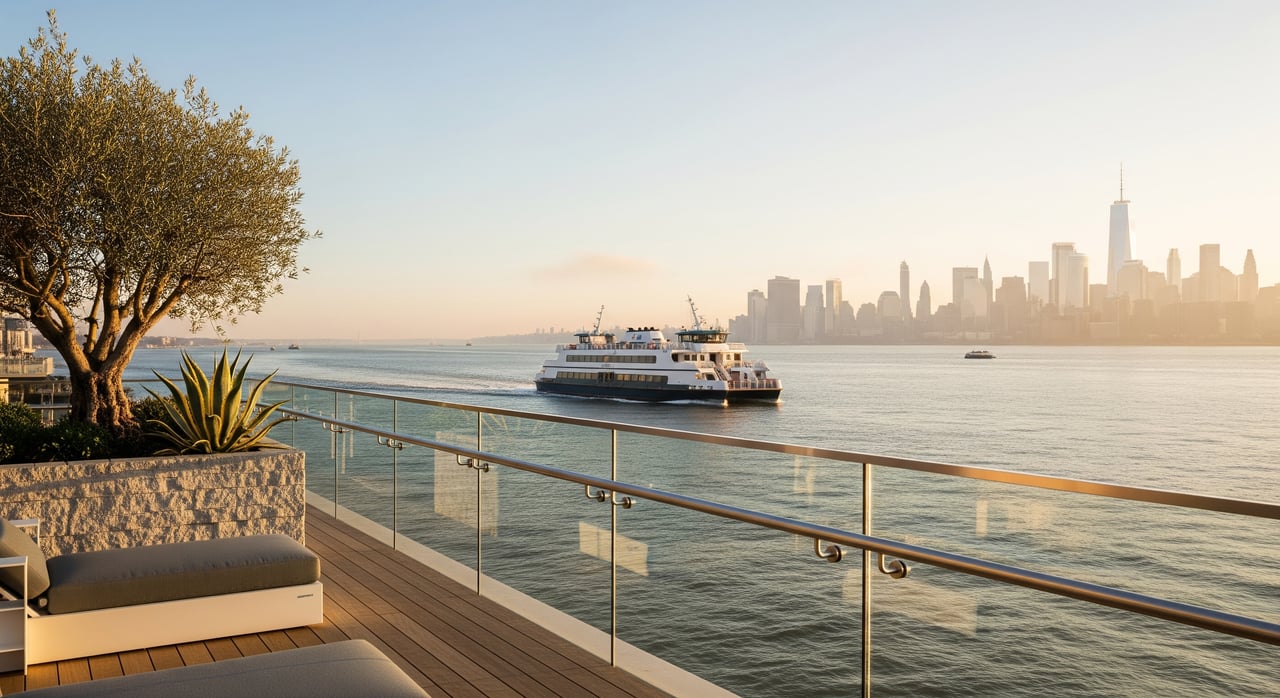
Is your commute shaping your home search more than anything else? If you are eyeing Weehawken’s waterfront, the ferry can be the difference between a stressful rush and a smooth, scenic start to your day. You want predictability, comfort, and clear information on routes, timing, and passes so you can decide if the ferry fits your life.
This guide breaks down how the Weehawken ferry works, where it lands in Manhattan, when it runs, how tickets and passes typically work, and how it compares to buses or rideshare. You will also get practical tips for daily life along Port Imperial and Lincoln Harbor. Let’s dive in.
How the Weehawken ferry works
Weehawken’s primary ferry hub is the Port Imperial terminal, a modern waterfront transit center within easy reach of nearby residential towers and the promenade. North along the waterfront, Lincoln Harbor connects into the same pedestrian corridor and serves as another area with residential buildings and public spaces.
NY Waterway operates commuter-focused service from Port Imperial to Manhattan. Routes commonly connect to Midtown West and to Lower Manhattan, with higher frequency during weekday peak hours and reduced service off-peak. Exact routes and stops can change seasonally or for operations, so check the latest details on the NY Waterway site before you go.
The terminal and vessels are set up for everyday commuting. Facilities are ADA-accessible, and ferries typically allow bikes and small luggage, with space limits during rush hour. Boarding is straightforward with mobile tickets or kiosks during busy periods.
Routes and Manhattan landings
For most Weehawken commuters, the ferry focuses on two Manhattan zones:
- Midtown West: West 39th Street/Pier 78 area. This is convenient for offices in the 34th to low 40s street range and for crosstown connections.
- Lower Manhattan: Brookfield Place/Battery Park City area serving the FiDi cluster, with multiple subway lines within walking distance.
The exact docking points and which routes serve them can vary. Before your first commute, preview route maps and landing options on the official NY Waterway site and plan your last-mile connections.
Schedule rhythm and travel times
Weekday mornings and evenings are the heart of ferry operations. During these peaks, you can typically expect departures every 10 to 30 minutes on primary routes. Midday, late evening, and weekends often run less frequently, and late-night options are limited.
Water crossings from Port Imperial to Midtown are usually short, often in the single-digit to low double-digit minutes. Connections to Lower Manhattan take longer because of the extra distance. Even though ferries avoid tunnel traffic, marine conditions and weather can affect service. For a smooth ride, build a small buffer both for boarding in Weehawken and for the walk or subway connection once you land in Manhattan.
For day-to-day updates, use NY Waterway’s tools for schedules and real-time advisories on the NY Waterway homepage. For regional advisories that affect waterways, the Port Authority of NY & NJ is also a helpful resource.
Tickets and passes: what to expect
Ferry fares are structured for different commuting patterns. Options typically include:
- Single-ride and round-trip tickets
- Multi-ride value products
- Weekly and monthly commuter passes
- Mobile ticketing through the operator app
Many employers allow you to apply pre-tax commuter benefits to ferry purchases, which can reduce your net cost. Ferries operate outside the subway and PATH fare systems, so plan on paying separate fares if you transfer. If you are commuting several days a week, a monthly pass can lower your per-trip cost. Pricing and options can change, so confirm current offerings on the NY Waterway site before you buy.
Last-mile connections in Manhattan
Your end destination in the city will shape your door-to-door time. After you disembark:
- Walking: Many Midtown and FiDi offices are a short walk from the landings.
- Subway: Midtown landings connect to nearby lines with a short walk. FiDi landings have multiple subway options within walking distance and PATH access near the World Trade Center area.
- Bike-share, scooters, buses, and rideshare: These modes are usually available near the piers. Bringing your own bike can work, with space limits during peak sailings.
If your office is in West or Central Midtown, ferry plus walking can beat a bus during heavy road congestion. For East Midtown, add time for crosstown subway or bus transfers.
Ferry vs bus or rideshare: key trade-offs
Choosing your commute often comes down to predictability, cost, and schedule flexibility. Here is how the ferry stacks up against common alternatives used by Weehawken residents:
- Predictability: Ferries avoid Lincoln Tunnel backups. During major road delays, ferries are often more reliable.
- Cost: Ferries generally cost more per ride than NJ Transit or private buses. Monthly passes and pre-tax benefits can help.
- Time: In peak traffic, ferry crossings plus a short walk can be faster and more consistent than buses that sit in tunnel traffic.
- Comfort and experience: Ferries offer a calm ride with seating and skyline views, and can be more comfortable than crowded buses or trains at peak times.
- Flexibility: Buses and rideshares run later. If your schedule is irregular or you expect late nights, confirm the last ferry and have a backup plan.
For road-based options and schedules, check NJ Transit to plan bus connections into Midtown.
Living on the waterfront: daily life details
The Weehawken waterfront around Port Imperial and Lincoln Harbor features high-rise residences with walkable access to the ferry, parks, and promenades. Many residents choose these buildings to minimize their morning routine and enjoy the views.
A few lifestyle points to consider:
- Walkability: If you can walk to the terminal, you skip parking costs and morning traffic. Measure your door-to-dock time.
- Parking: Terminal garages and nearby parking exist but can be limited or priced. Availability and terms can change, and monthly contracts may be offered.
- Activity levels: Expect commuter flow around the terminals during rush hours, including ferry operations, maintenance activity, and pedestrian traffic.
- Resale and rental appeal: Units near the ferry often attract NYC commuters who value fast access and views. Market dynamics shift with commuting patterns, so discuss timing and pricing with a local expert.
Smart commuter tips
Use these practical steps to keep your commute smooth and stress-free:
- Check live schedules and alerts daily. Seasonal shifts and weather can change service. Use tools on the NY Waterway site for updates.
- Time your walk. Add 5 to 10 minutes for boarding during peak periods and plan your Manhattan last-mile connection.
- Match your pass to your week. If you commute 3 to 5 days regularly, run the math on weekly or monthly passes and factor in pre-tax benefits.
- Build a weather backup. Know your alternate route if ferries are delayed, such as an NJ Transit bus to Port Authority or a connection to PATH via Hoboken.
- Bike smart. Confirm the operator’s bike policy. Foldable bikes can be easier during rush hour.
- Mind the last run. Late-night service is limited. If you work late or plan a night out, confirm your return options.
Is the ferry right for you?
Use this quick checklist to gauge fit:
- Your office is in West or Central Midtown, or FiDi within walking distance of the landing.
- You value a predictable commute during rush-hour traffic and want to avoid tunnel delays.
- You are comfortable paying a bit more for speed, comfort, and views.
- Your schedule lines up with commuter peak periods, or you have a backup for late nights.
- You can walk or bike to Port Imperial, or you accept the cost and logistics of parking.
If most of these ring true, living near the Weehawken waterfront and commuting by ferry can be a great lifestyle upgrade.
How to test your commute before you commit
Before you sign a lease or purchase contract, take a trial run:
- Ride during your actual commute window on a weekday. Note wait times, boarding flow, and crowd levels.
- Walk from a favorite building to the terminal at your normal pace and time it.
- Try both Midtown and FiDi routes if your workplace is between zones. Compare door-to-door times.
- Do a rain-day test and a windy-day test if possible. Confirm how alerts and schedule tweaks affect your timing.
- Price out a monthly pass and add parking, if needed. Compare against a bus or rideshare budget.
This real-world test will give you confidence that the ferry fits your routine.
Working with a local guide
Finding the right building near Port Imperial or Lincoln Harbor takes local insight. You want accurate guidance on walk times, parking options, and market dynamics tied to commuting patterns. If you would like help mapping buildings to your actual commute and budget, reach out to Sonia Dasilva. Let’s connect.
FAQs
What ferry routes serve Weehawken’s Port Imperial?
- NY Waterway operates commuter routes from Port Imperial to Midtown West and to Lower Manhattan. Routes and docking points can change seasonally, so confirm current options on the NY Waterway site.
How long is the ferry from Weehawken to Midtown?
- The water crossing is typically short, often in the single-digit to low double-digit minutes, with total time depending on boarding and your walk once you land.
Are ferry tickets integrated with the subway or PATH?
- Ferries run on a separate fare system. You will pay a separate fare for subway or PATH connections unless a limited program is offered; verify details with the operator.
Is parking available at Port Imperial for commuters?
- Parking garages and lots exist near the terminal but can be limited or priced, and terms may change. Many residents walk or bike to avoid parking costs.
Do ferries run late at night from Manhattan back to Weehawken?
- Late-night service is limited compared with buses or rideshare. Always check the last departure and plan a backup option if you expect a late return.