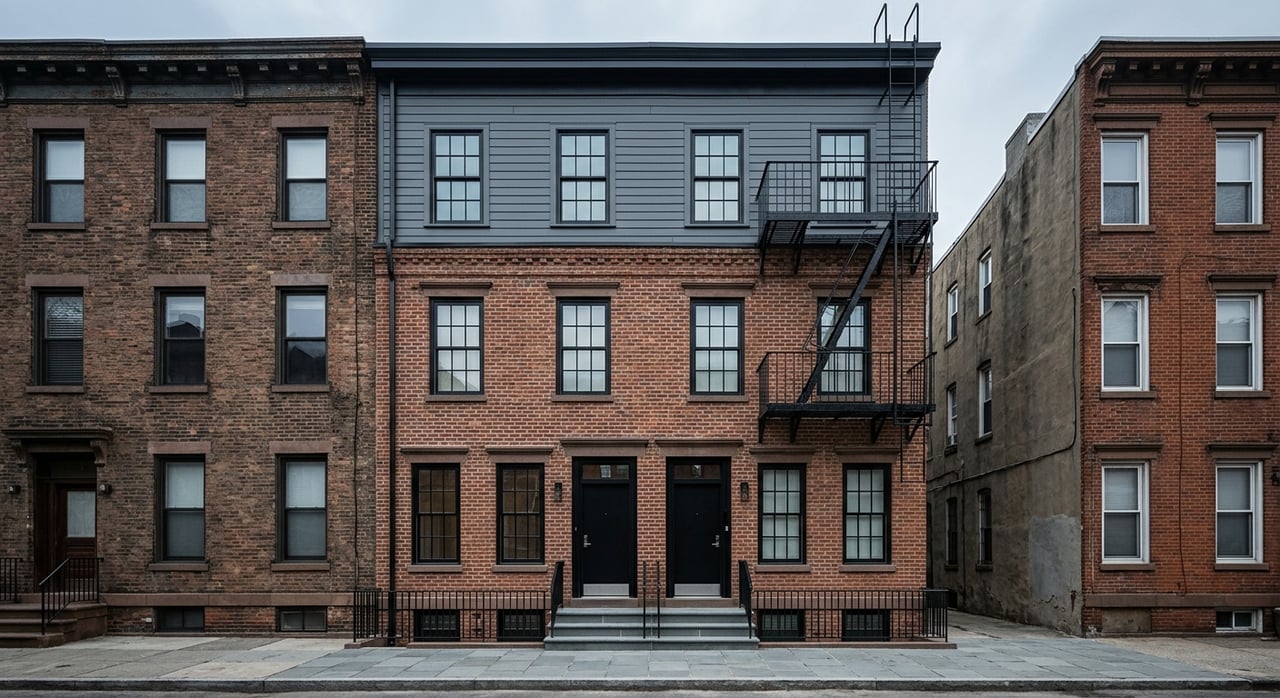
If you want to buy your first multi-family property in Hudson County, Union City deserves a close look. It is one of the most renter-focused, densely built markets in the area, which can create opportunity for new investors who plan carefully. The key is knowing what you are really buying: older housing stock, compact unit layouts, and a city with important local rules that directly affect your numbers. Let’s dive in.
Why Union City Stands Out
Union City is built for rental housing in a way many nearby markets are not. Census QuickFacts shows a 2024 population estimate of 66,918, with 25,725 households and an owner-occupied housing rate of just 19.1%. That means a large share of the local housing market is renter occupied.
The city is also extremely dense, with 53,293.7 people per square mile. For you as a new investor, that density matters because it supports steady demand for apartment living and makes multi-family housing a core part of the local market rather than a niche product.
Union City is also a multilingual community. Census data shows 81.8% of residents speak a language other than English at home, and 54.3% are foreign-born. That does not change the fundamentals of investing, but it does highlight the value of clear, practical, and accessible tenant communication.
What You’re Likely to Buy
If you picture a suburban-style rental complex with wide parking lots and newer garden apartments, Union City will probably feel very different. Historical city planning data shows a long-established multi-family housing base, with substantial shares of 2-unit, 3 to 4-unit, 5 to 9-unit, 10 to 19-unit, and 20-plus-unit buildings.
That pattern still shows up in the current rental landscape. RentCafe reports that 89% of Union City rentals are in complexes with fewer than 50 units, while only 8% are in larger buildings. The average rental building is 63 years old, which lines up with the city’s older housing profile.
For many first-time investors, that means the most realistic opportunities may include:
- 2 to 4 family homes
- Older walk-up apartment buildings
- Small to mid-size multi-family properties
- Some mid-rise or high-rise inventory
The city’s older master plan snapshot also found that 69% of housing was built before 1950. In practical terms, you should expect age-related due diligence to be a major part of your buying process.
Unit Sizes Are Often Compact
Union City tends to be a market of smaller apartments rather than oversized units. Historical city housing data showed a median of 3.7 rooms per unit, which suggests many apartments function as compact 1 to 2 bedroom layouts.
Current rental platform data supports that general pattern. RentCafe reports that 51% of rental floor plans are 1-bedroom units and 32% are 2-bedroom units. For a new investor, that is useful because it helps you focus your underwriting on the kinds of units most commonly found and leased in the market.
This also means you should be careful about assuming every property has the same tenant appeal. A well-laid-out 2-bedroom in an older building may perform very differently from an awkwardly configured unit with outdated systems or deferred maintenance.
How to Think About Rent Projections
One of the biggest mistakes new investors make is using optimistic rent numbers to justify a purchase. In Union City, a better approach is to start with a conservative baseline and then test your assumptions.
Census QuickFacts lists the median gross rent at $1,537. That is a useful reference point, but active asking rents are higher. RentCafe reported an average apartment rent of $2,162 in April 2026, with 1-bedrooms at $1,896 and 2-bedrooms at $2,659, while Trulia reported 1-bedrooms at $1,994 and 2-bedrooms at $2,650 in May 2026.
A practical way to underwrite is to view current asking rents as roughly the low $2,000s for 1-bedroom units and the mid $2,000s for 2-bedroom units, while remembering that listing platforms use different methods and asking rent is not always the same as achieved rent. If the building has older finishes, long-term tenants, or regulated units, your actual numbers may be lower.
Rent Stabilization Can Change Your Math
This is one of the most important points for new investors in Union City. The city has active rent stabilization, and that can directly affect your future rent growth.
For covered units, the maximum annual permissible increase is 3% or the latest New York-Northern New Jersey CPI increase for the prior 12 months, whichever is less. For qualified senior tenants, the cap is 2% or CPI, whichever is less.
The city’s rent-review materials also say tenants can request non-binding mediation when a rent increase exceeds 7%, or when multiple increases within a 12-month period total more than 7%. Landlords must participate in that process.
The takeaway is simple: if you are buying a regulated asset, assume conservative rent growth. Do not build your deal around aggressive year-one increases unless you have verified the unit status and understand the local rules in detail.
Know Which Buildings May Be Exempt
Not every property is treated the same way under Union City’s rent stabilization rules. The code applies to individual dwelling units, not to occupants, and the city makes clear that a landlord cannot avoid the rules by calling the agreement something other than a lease.
The research report notes several exceptions, including owner-occupied buildings with one to three units and non-owner-occupied buildings with one or two units. It also notes that rented condominium and cooperative units are not exempt, and that an owner-occupied three-family can claim an exemption only through the required affidavit process.
For you, this means exemption status should never be assumed. Before closing, confirm how the city classifies the property and whether any exemption has been properly documented.
Local Compliance Is a Big Part of Due Diligence
In Union City, due diligence goes well beyond the usual inspection and financing checklist. Local compliance can affect your timeline, your carrying costs, and your ability to lease units after closing.
On a sale or change in occupancy, the landlord must secure a certificate of continuing occupancy before the unit is used again. The city’s inspection approval process requires confirmation of compliance with building, health, safety, property maintenance, and fire codes, and the application lists a $75 per-unit fee while also asking for an updated rent registration.
That matters because a unit may not be ready for immediate occupancy just because the closing is complete. If your investment plan depends on fast turnover, make sure you understand what must be filed and inspected before a new tenant moves in.
Registration and Rental Licensing Matter
New landlords must file a certificate of registration for each multifamily dwelling at the start of the first tenancy. If information changes, it must be updated within 20 days, and tenants must receive a copy at the start of a new tenancy.
Union City also requires a business license for each residential rental unit, and all residential rental units must be registered with the city. The city’s rental-license system is set up for applications, renewals, updates, payments, and closing licenses, which tells you this is not a one-time task.
For a first-time investor, this is a good reminder to budget both time and administrative follow-through. A great purchase can become stressful fast if paperwork is incomplete.
Older Buildings Need Extra Attention
Because much of Union City’s housing stock is older, lead-paint rules deserve careful review. New Jersey requires periodic lead-based paint inspections for certain single-family, two-family, and multiple rental dwellings every three years or upon tenant turnover unless there is a valid lead-safe certificate. Dwellings built in or after 1978 are exempt.
Union City also has local inspection fees. The city charges $120 per unit for structures with four units or fewer and $220 per unit for structures with more than four units when city employees perform the inspection.
This is the kind of detail that can affect your renovation budget and turnover timeline. If you are evaluating an older 2 to 4 family property, ask early about lead inspection history and certificate status.
Bigger Buildings Bring More Rules
If you are looking at a property with six or more residential units and the owner provides heat, Union City requires annual boiler certification between June 1 and September 1, with filing by September 10. The city also requires heating-system malfunctions to be repaired within 12 hours of notice.
Owners of multifamily structures with four or more units must also report vacancies that continue for 90 days and report new rentals within 90 days, including the inspection approval certificate. That is especially relevant if your business plan assumes extended vacancy during renovations or lease-up.
In short, larger buildings may offer scale, but they can also require more active compliance management. New investors should factor that into both time and operating costs.
Insurance and Rental Strategy
Union City requires owners of rental units to maintain at least $500,000 in liability coverage. For an owner-occupied multifamily of four or fewer units, the minimum is $300,000. The certificate of insurance must be registered annually with the city clerk by January 1.
The city also prohibits short-term vacation rentals of 30 days or less in residential properties. That means a Union City multi-family should be analyzed as a long-term rental investment, not as a short-term rental opportunity.
If your original plan was to mix long-term units with short-term stays, this market will require a different approach. Your underwriting should reflect stable, long-term leasing instead.
A Smart First-Investment Approach
For many new investors, the best first step in Union City is not chasing the biggest building. It is buying a property you can understand, inspect thoroughly, and operate confidently.
A practical approach may look like this:
- Focus on 2 to 4 family or small multi-family properties first
- Use conservative rent assumptions from day one
- Verify rent stabilization status before making final numbers work
- Review occupancy, registration, license, and inspection requirements early
- Plan for older-building repairs and compliance costs
- Underwrite the property as a long-term rental asset
That kind of discipline can help you avoid buying a property that looks good on paper but becomes expensive in practice.
Why Local Guidance Helps
Union City can be a strong market for a first multi-family purchase, but it rewards preparation. Between older housing stock, compact unit layouts, rent stabilization, and city-specific compliance rules, small details can have a big effect on your return.
When you work with a local agent who understands Hudson County inventory, investor priorities, and the pace of urban transactions, it becomes easier to spot red flags early and move with confidence. If you’re thinking about buying your first multi-family in Union City, Sonia Dasilva can help you evaluate opportunities, understand the local market, and take the next step with clear, hands-on guidance.
FAQs
What types of multi-family properties are common in Union City?
- Union City commonly includes 2 to 4 family homes, older walk-up apartment buildings, smaller multi-family properties, and some mid-rise or high-rise buildings.
Are Union City rents high enough for first-time investors?
- Current asking rents suggest potential demand, with 1-bedroom units around the low $2,000s and 2-bedroom units around the mid $2,000s, but you should underwrite conservatively because asking rents and achieved rents can differ.
Does rent stabilization affect Union City multi-family investments?
- Yes. Covered units are subject to local rent stabilization rules, which can limit annual rent increases and affect how you project future income.
What inspections matter when buying a Union City rental property?
- Depending on the property, key items may include certificate of continuing occupancy requirements, lead-based paint inspections, and building, fire, health, and safety compliance review.
Can you use a Union City multi-family as a short-term rental?
- No. Union City prohibits short-term vacation rentals of 30 days or less in residential properties, so these properties should be treated as long-term rental investments.
What should a new investor verify before closing on a Union City property?
- You should verify rent stabilization status, registration and rental-license requirements, occupancy certificate needs, insurance requirements, lead-paint obligations, and any building-system inspection rules that apply to the property.