If you are trying to choose between renting and owning in Union City, the answer often comes down to how you want to live day to day. This is a dense, commuter-oriented Hudson County city with older housing stock, active commercial corridors, and a housing mix that can feel very different from one block to the next. When you understand the tradeoffs around transit, parking, building type, and space, you can make a much smarter move. Let’s dive in.
Union City at a glance
Union City is compact, busy, and highly urban. The U.S. Census Bureau estimates about 66,918 residents in 2024, with roughly 53,293.7 people per square mile, which gives you a sense of how close together homes, shops, and daily services are.
It is also a renter-heavy city. Census QuickFacts reports that just 19.1% of housing units are owner-occupied, and the median gross rent is $1,537. For many people, that means Union City first shows up on the radar as a place to lease, then later as a place to buy when they want to stay in Hudson County long term.
Union City is also multilingual and internationally connected. Census data shows 54.3% of residents are foreign-born and 81.8% speak a language other than English at home, which helps shape the city’s street life and everyday rhythm.
What living in Union City feels like
Union City has a hilltop setting tied closely to the Palisades. The city’s history page points to skyline views from elevated spots, including the high school stadium, and notes that many architectural details are easiest to appreciate when you look up.
That detail matters because Union City often feels more intimate than a tower-centered neighborhood. You get older buildings, mixed-use streets, parks, plazas, and arts venues woven into everyday life rather than separated into distinct districts.
Another defining feature is how daily life centers around corridors instead of one single downtown. The city identifies Bergenline Avenue and parts of Summit Avenue as key commercial districts, lined with shops and active seven days a week.
Renting in Union City
For renters, Union City can be appealing because the city already has a strong apartment culture. The housing pattern includes apartments mixed throughout the city, and the older master plan describes a range of permitted housing types, including garden apartments and high-rise apartment buildings.
That means your options may include units in older multifamily properties, mixed-use buildings along busier avenues, or apartments in more residential pockets. In a city this dense, your experience can change quickly depending on whether you are on a commercial corridor, near a transit stop, or on a quieter side street.
Renters should also know that Union City has a Rent Control office and publishes a Rent Stabilization Ordinance. In plain terms, this is a more regulated rental environment than a city where rents are entirely market-driven, so it is worth understanding how a specific unit is governed before you sign a lease.
What renters may like most
- Strong rental presence throughout the city
- Mixed-use blocks with shops and services nearby
- Transit options for commuting into Manhattan, Hoboken, and Jersey City
- A street-level, neighborhood feel rather than a high-rise-only environment
What renters should watch closely
- Whether the building falls under local rent regulation
- How close the unit is to bus or rail service
- Street activity on major corridors versus side streets
- Parking realities if you have a car
Owning in Union City
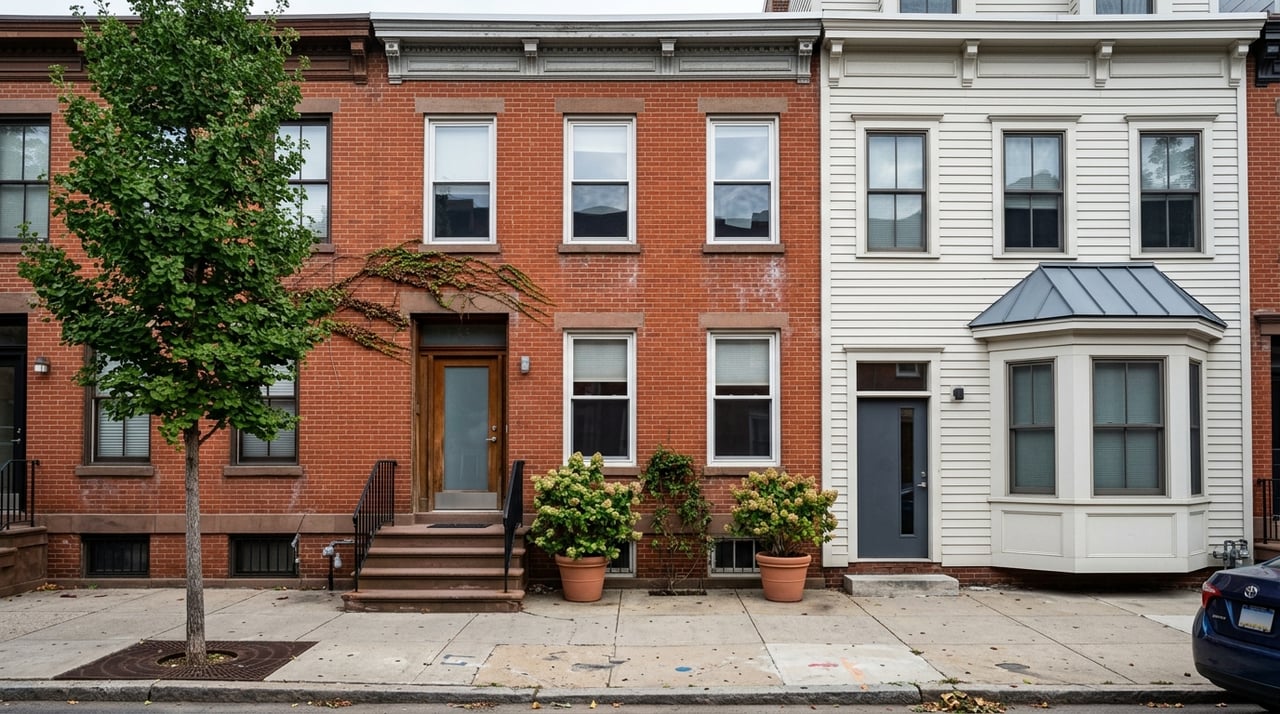
If you are thinking about buying, Union City can appeal to people who want to build roots in Hudson County while staying connected to larger job centers. The city’s land use pattern includes one- to four-family homes, row houses, apartments, and mixed-use properties spread throughout the city rather than isolated in one area.
Buying here often means buying into older housing stock. The city’s planning documents emphasize preserving older residential buildings and protecting existing residential densities, which tells you that much of Union City’s appeal is tied to its established built environment.
That can be a plus if you like character, location, and a neighborhood feel. It also means you should pay close attention to layout, storage, updates, building systems, and especially parking.
Parking is a big part of the decision
In Union City, parking is not a small detail. The city’s 2021 reexamination report notes that newer three-family homes on 2,500-square-foot lots have created circulation and overflow parking problems, and it stresses the importance of new development meeting parking needs on-site.
For you as a buyer, that means parking should be part of the home search from the start. A beautiful unit can feel very different once you factor in daily car use, overnight parking, guest parking, and how often you really expect to drive.
If you plan to own a car, ask practical questions early:
- Is there on-site parking?
- Is parking deeded, assigned, shared, or not included?
- How does the block feel at night or on weekends?
- Will your commute truly work without driving every day?
Transit shapes the ownership and rental experience
Transit is central to life in Union City. NJ Transit lists Bergenline Avenue Station between 48th and 49th Streets on Bergenline Avenue, and the Hudson-Bergen Light Rail connects western Jersey City with Exchange Place, Newport Center, and Hoboken Terminal.
Bus service is especially important here. NJ Transit route 125 serves Union City stops at 31st Street at Bergenline Avenue and 30th Street at Palisade Avenue for service on the Jersey City, Journal Square, and New York line. Route 127 serves 32nd Street at Bergenline Avenue, and route 129 serves stops at 31st Street at Bergenline Avenue and 30th Street at Palisade Avenue.
The city’s master plan says Union City relies on the light rail, NJ Transit bus service, and jitneys, while also acknowledging that parking remains a major constraint and transit is not robust enough to replace private automobiles for many residents. In everyday terms, Union City works well for many commuters, but your exact building location and your need for a car can change the equation quickly.
Rent or own: how to think about it
The better choice depends on your timeline, commute, and tolerance for tradeoffs. In Union City, both renters and owners benefit from location, access, and neighborhood energy, but they experience the city a little differently.
| If you value... | Renting may fit better | Owning may fit better |
|---|---|---|
| Flexibility | Easier to adjust if your job or commute changes | Better if you plan to stay put longer term |
| Upfront cost | Usually lower than buying | Higher upfront commitment |
| Building responsibility | Often less day-to-day responsibility | More control over your property decision |
| Parking strategy | Easier if you want to test car-free living | Important to solve before closing |
| Long-term plans | Useful for trying the area first | Useful if you want to put down roots in Hudson County |
If you are new to the area, renting can give you time to learn which corridors, transit patterns, and building styles suit you best. If you already know you want to stay in Hudson County and want more permanence, ownership may make more sense, especially if you find a property that matches your commute and parking needs.
What to expect block by block
One of the most important things to understand about Union City is that it is not a one-note place. Residential and apartment uses are spread across the city, and commercial uses are woven into the fabric as well.
That means you should expect a block-by-block search, not just a citywide one. Two homes that look similar online may offer very different experiences based on street grade, corridor access, parking, noise, and how close you are to the bus or rail connections you actually use.
Why local guidance matters here
Union City rewards local knowledge. Because the city is dense, older, and shaped by mixed-use development, the details matter more than broad generalizations.
If you are renting, you want clarity on the building, the lease, and the day-to-day setup. If you are buying, you want a sharp eye on housing type, parking, transit access, and how the property fits your long-term plans.
Whether you are relocating, buying your first place, leasing closer to your commute, or exploring an investment property in Hudson County, a neighborhood-specific strategy can save you time and help you avoid expensive surprises.
If you want help comparing rental and ownership options in Union City, Sonia Dasilva can guide you through the local market with practical insight, responsive service, and a Hudson County perspective.
FAQs
What is it like to rent in Union City, NJ?
- Renting in Union City often means living in a dense, mixed-use city with apartment options throughout the community, strong bus access, and a more regulated rental environment because the city maintains a Rent Control office and Rent Stabilization Ordinance.
What is it like to buy a home in Union City, NJ?
- Buying in Union City usually means evaluating older housing stock, smaller lots, and parking very carefully while balancing those factors against commuter access and the benefits of owning in Hudson County.
Is Union City, NJ more renter-heavy or owner-heavy?
- Union City is much more renter-heavy, with Census QuickFacts reporting a 19.1% owner-occupied housing rate.
How do commuters get from Union City to Manhattan or Jersey City?
- Commuters commonly use NJ Transit bus routes, Bergenline Avenue Station on the Hudson-Bergen Light Rail, and other local transit options such as jitneys, with buses playing a major role in everyday travel.
Does parking matter when renting or buying in Union City?
- Yes, parking is a major consideration in Union City because the city’s planning documents identify overflow parking and circulation issues as ongoing concerns, especially with dense multifamily development.
Are homes in Union City mostly detached houses or apartments?
- Union City includes a mix of one- to four-family homes, row houses, garden apartments, high-rise apartment buildings, and mixed-use properties spread across the city.